Simulated datasets
The between-tool comparisons use simulated amplicon data. To generate this data: 1. Ancestral populations were built from publicly available monoclonal Plasmodium falciparum genomes from Ghana (2016–2017) and Cambodia (2016–2017). 2. recombuddy was used to simulate recombination events, parameterized to reflect various epidemiological environments, and combine them with the ancestral genomes to generate simulated populations. Microhaplotypes corresponding to the MAD4HatTeR panel were then constructed from these populations. 3. Library preparation and sequencing error were simulated with TAPPS. 4. Microhaplotypes were called with the MAD4HatTeR pipeline.
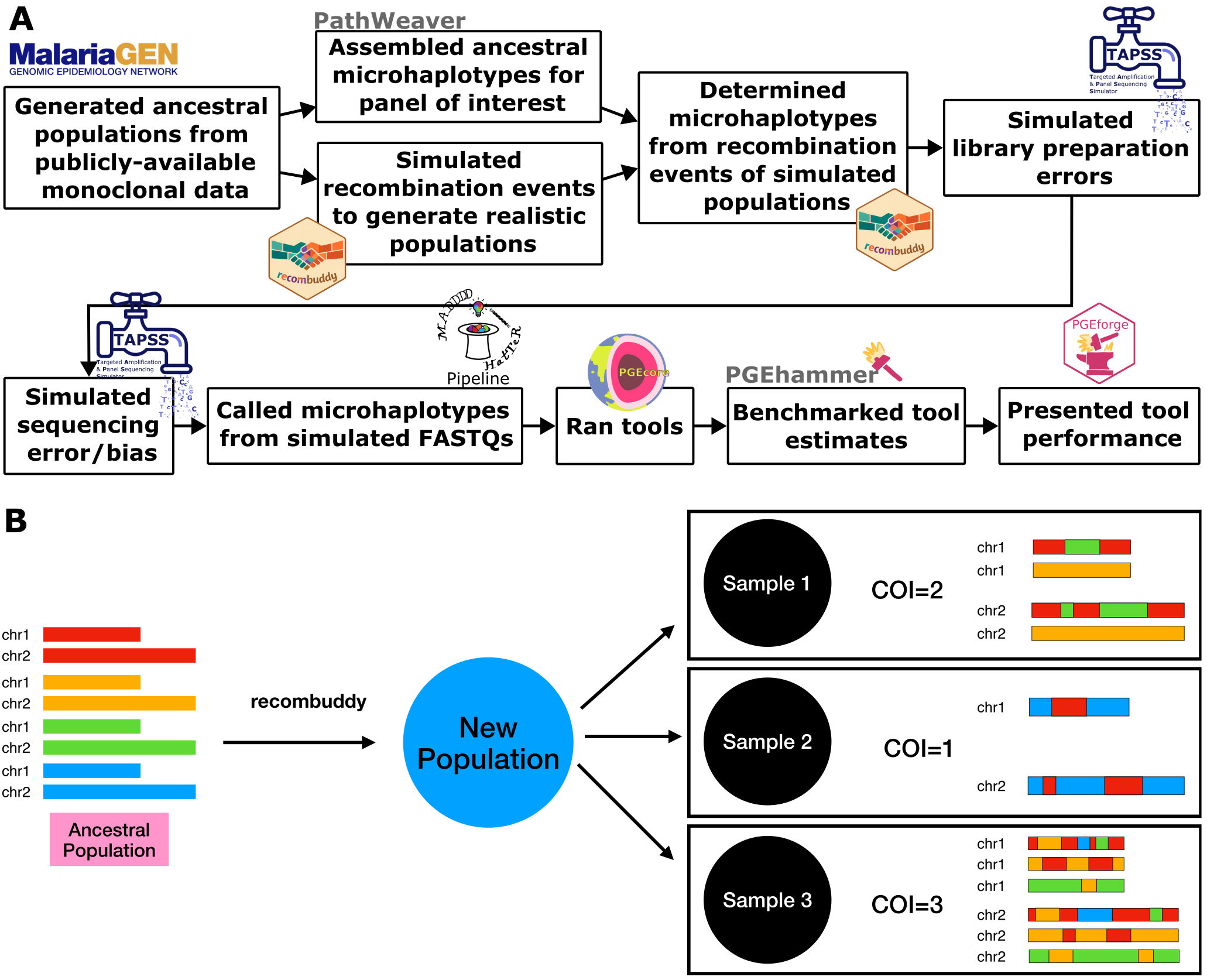
Two versions of these simulated amplicons were used for benchmarking: 1) the full MAD4HatTeR panel and 2) a subset of 15 high-diversity targets that are far enough apart on the genome to be physically unlinked.
The simulated files will be linked from this page when they are archived. Each set of files will be cited by its archive record, such as a Zenodo DOI. A comprehensive description of the method for making the simulated dataset will be included in an upcoming publication that will be cited when available. The tool comparison can be found on the benchmarking overview.
Back to top